
Anti vibe coder's guide to building with AI
Claude Code and Cursor hacks I wish I knew earlier

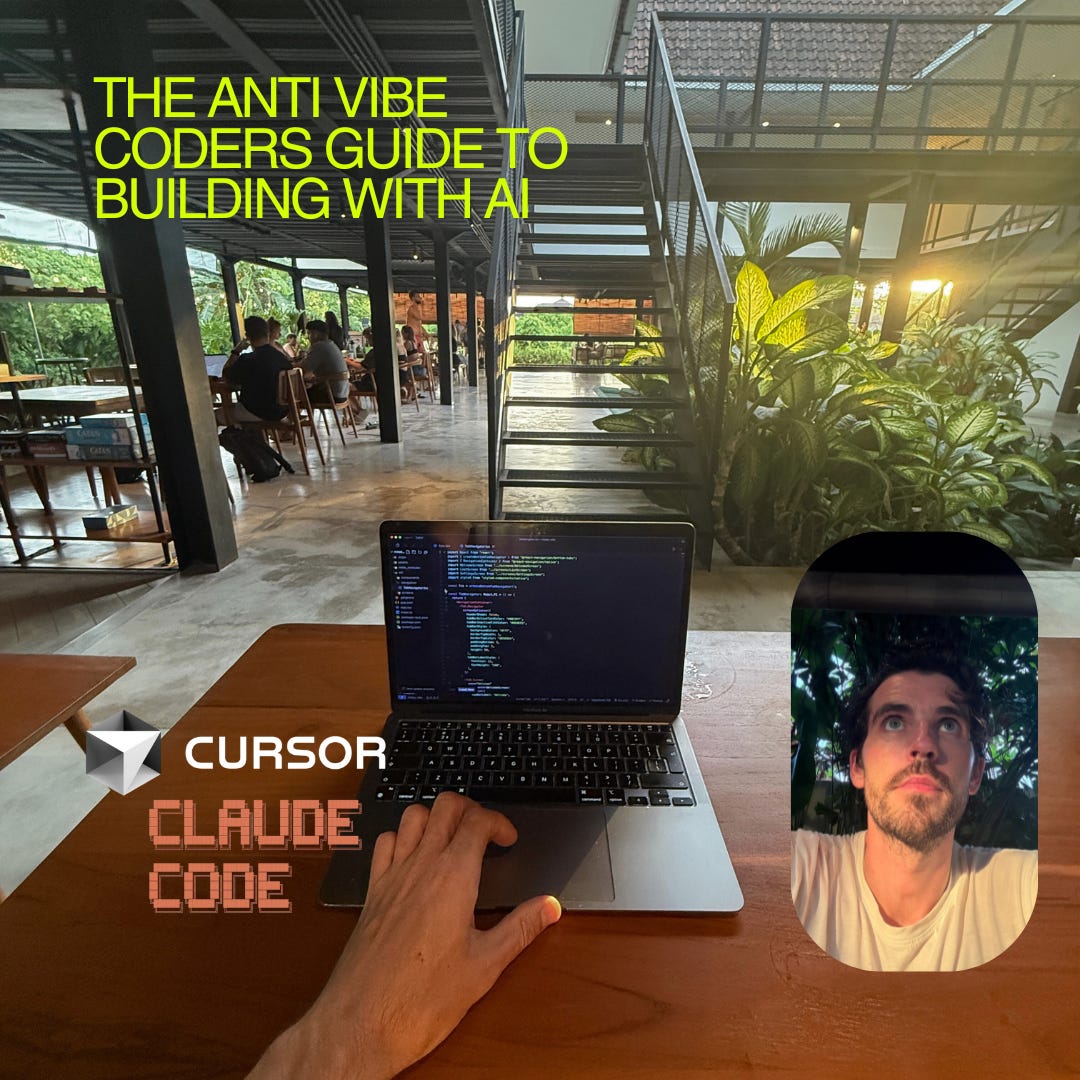
Hey,
In this one I’m going to share some Cursor and Claude code hacks I wish I knew earlier (and a personal update at the end).
Like everyone else, I’ve seen the role of a programmer dramatically shift in the last year.
Today, one of the core skills you need to get to grips with, is how to get the most out of AI coding assistants, agents and tools. You’ve got some people who are picking it up straight away.
Whilst others are clinging onto manual coding, and seem a bit in denial. Soon, their employers will get onboard and AI coding will be the norm. So best learn about this stuff now I say.
It doesn’t mean you don’t need to learn coding anymore. You will. But for now just treat AI assisted coding as a new set of skills to learn (e.g context, memory, prompting). Alongside everything else 😅I’ve been starting to build my own mobile app over the last month (I’ll share more of it on here soon). And have used most of these coding assistants.
As a tech content creator I randomly get sent free credits from them, so tested lots of them at this point.
A turning point for me, was earlier in the year when I used Devin.ai by Cognition (yep, that one). It was the first time I’d ever seen agents at work. I was like, okay, yep, I see where this is going.
Time to get onboard and learn how these work. I think we’re gonna be the pilot of these things very soon, the role will broaden out to take on more tasks, and will evolve with people having a ‘T shaped skill set’.
Next newsletter post/YouTube video will focus on this concept, and how you can prepare.
I’ve experimented a bunch, and this is what I’ve learnt using the two most popular right now, Claude Code and Cursor (which you can just use together).
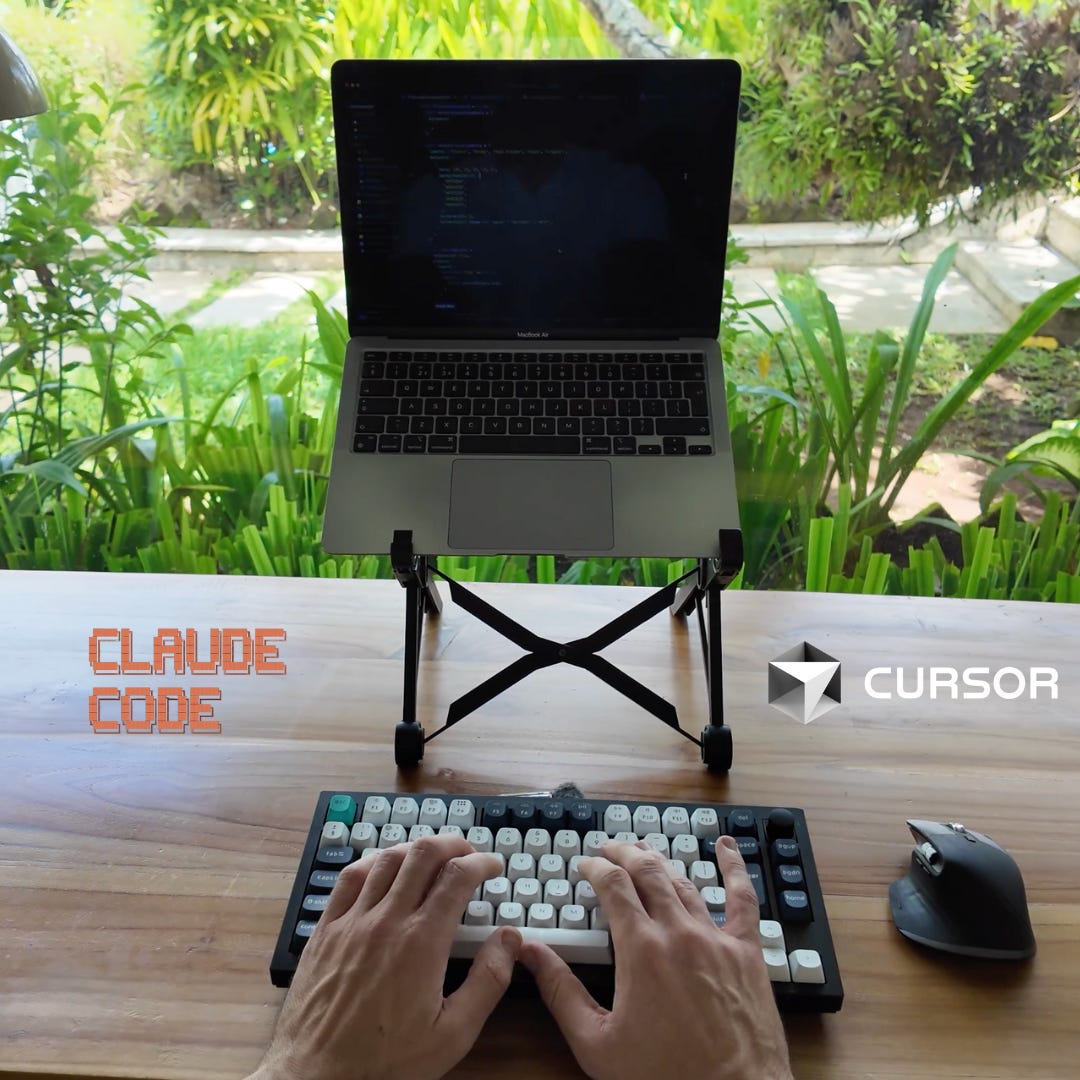
1. Firstly, don’t be a snob
‘If you write code with Al you’re gonna be unemployable in the future!’
Not correct. This is now a core skill to learn. You can do both. Code deeply, understand it, and use Al critically and intelligently. Also, it can be fun to build quickly.
2. Number one mistake people make
Not using plan mode. As you will be coding less, the price is that you have to plan more. Use plan mode. Otherwise it’s just vibes. Al coding is fast, but you’ll go fast in the wrong direction without planning it first.
Which will cost $£€. Getting the AI to do this, means it will correct itself and find edge cases you hadn’t even thought of. This is where you use ‘ultrathink’ (Claude), which is more expensive, but where the tokens are worth using.
3. The Mindset. Pair, don’t prompt
Give it context, ask why, review decisions, and learn together. Treat it like pair programming. Doing it mindlessly is cheating your future self out of growth. Also review things.
My mantra with AI coding which I always think of, is this.
When you are working for a company, their primary focus is not your growth and development. Their goal is to get a product out, and make money from it. So always have that in mind, use their time, to learn.
4. Learn from your rabbit holes
Errors are constant in programming. When I started, I used to panic when I’d get one, but years of training later when I see an error now, I say ‘interesting’ in my head.
That’s the shift into becoming a problem solver (my previous jobs in marketing, teaching and sales were not problem solver types roles, but it is a skill you learn).
With AI, learn from rabbit holes you go down solving bugs. Summarise, document the root cause and solution, so we don’t have to go through it again, key part of contextual engineering. So after a long debugging session, get the AI to learn how it solved the error.
5. If your design sucks
Do this. Steal designs. Go on a site like Mobbin. Take a screenshot of a site/app design you like. Say I want to update the design using this image.
But, ask it to use the colour scheme/font only from the design (so it doesn’t go crazy, change it all and maybe you hit the red error screen of doom).

6. Treat Al Like an ADHD Junior Dev
Treat Al like an ADHD junior dev. Ok granted, it’s fast. But needs constant guidance, tight context, and very specific tasks.
Otherwise it will rush, guess and (confidently) take you to error hell. LLM’s work by trying to fill in the blanks (with math) to please you, your goal is to make these blanks better.
7. Compound Engineering
Like money, your codebase compounds. Each iteration should make your Al smarter. Use Claude.md and Cursor.rules. Start basic, and add things that come up again and again (don’t put too much in, can bloat the context window).
But this idea of helping the AI with context is fundamental, so this is a key part of your role…in all this. Honestly, as a Senior dev, I’m still getting used to it.
8. Use MCP servers
Think of these like a "USB-C port" for AI to connect to the real world. You can pull live data, api’s, documentation etc into your project.
A good one is Context 7, which will generate context with up-to-date documentation for LLMs and AI code editors.
In general these can have security risks, for example the Supabase one is good, but just think, you’re giving it a hell of a lot of access (worst case scenario it deletes your database 💀) but highly unlikely, and worth the trade offs for most projects.
9. Al-generated code is not free
Use cheaper models for quick edits, reserve Ultrathink / Opus for hard problems, and stop agents early when they drift. A $20 Cursor + $20 Claude plan goes far if you’re intentional.
10. Be Careful in Production
AI tools are powerful but can make unsafe changes (e.g., DB schema). Always review before deploying.
This is a non negotiable, it’s a risky game if you are just pressing continue, without understanding and you are cheating yourself out of learning.
Also goes without saying, commit early and often.
If you liked this, gonna be releasing a full youtube video with Claude Code and Cursor hacks. In the meantime, if you’re looking to build an app, my latest video gives you a complete blueprint of what you need to do 👇🏼
Personal update
2025 was the most successful year of my life. I feel I’ve grown a lot. Although it wasn’t all plain sailing (😅) as I went through a break up. I did however, visit some incredible countries like Jordan, Iceland, Oman, Bali, Armenia, Portugal, Turkey.
Had loads of life affirming experiences. Highlight was sleeping outside, under a cave in the Wadi Rum desert, looking up and going asleep in the middle of nowhere seeing the milky way from my bed.
That’s the kind of sh$t that makes you fall in love with life again, and motivate you to work harder, so you can do more of it.
Also, I met people who follow me for the FIRST TIME. In Porto I had lunch with two locals, who were like, ‘is this you’ and pointed a phone at me (whilst I was coding in a cafe).
In Istanbul I hosted a meetup which was fun, life affirming and also surreal as loads of people came. In Bali I bumped into people, and had dinners with a few. And after 2 days of flying and jetlagged to hell, a girl in Bangkok ran up to me at a hotel I was in saying she follows me, and I could not match her enthusiasm.
But I loved every interaction, and it reminds me why I do this. My goal is to try and share the things I love about tech, also weave in my personal story at times too.
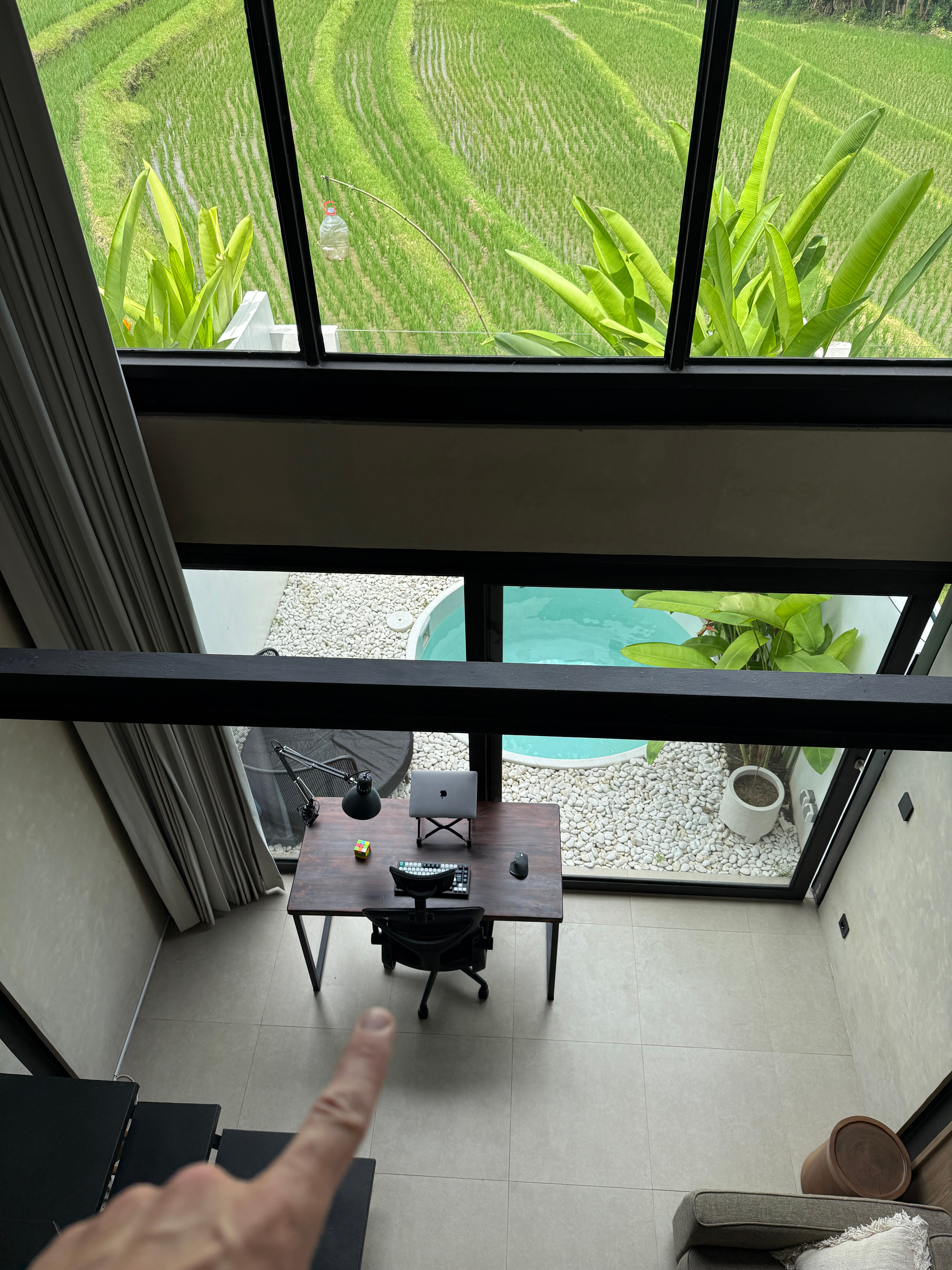
I ended the year working in probably the most popular digital nomad spot in the world right now, Bali. Lots of remote workers here. It feels like a bubble of cheap food, beautiful people and amazing cafes.
But also feels crazy busy at times, and like the place is changing to cater only for people working remotely. But I had fun, definitely feels like a life hack living there.
This year I’m heading to Rio Carnival to start the year 🇧🇷😅
Anyway, thanks for reading and supporting my content this last year. Sincerely, it means a lot and I shall see you in the next one.
Thanks for reading
A 👾
Love your brother.Its amazing. :)