
The number 1 future proof skill to learn in tech
An actionable step by step guide on how to learn the most valuable skill in the technology industry.

Hello fellow nerds,
Writing this from the UK, about to work remotely from Istanbul and Tbilisi for the next 2 months (never been to either before so comment on this post if you have any recommendations).

This month I’ve been learning Postgres, to build full stack apps with PERN (Postgres, Express, React and Node). It’s reinforced to me how much more feasible it is nowadays to become a full stack programmer. Up until 2 years ago I was kinda suspicious of this term. I still believe, it professionally better to work on one area of the stack (full stack developers are worked to death by some startups, and are paid only marginally more, but do have more job security).
I’ve also been dabbling in ethical hacking (for fun). The areas I find the most fun in the technology industry, programming, UX/design and ethical hacking. I met a guy last year who’d been a digital nomad for over a decade, and he made a living finding bug bounties for WordPress sites. He was so engrossed in it, the thrill of trying to hack into something. It paid well too. I think I like these areas, as they allow you to get into the ‘flow state’, and lose track of time, as you are so absorbed in the work. I spent my 20’s in mindless sales and marketing roles, so I value work that allows you get to into that flow.
The number one tech skill to learn, and how to learn it.
If you had asked me this 2 years ago, the answer would have been different.

As of today, these skills stand out, but aren’t number one.
Python - chosen language of AI/ML, backend, data science, AI agents.
React - I honestly didn’t think React would still be so dominant. I thought in 2021, that it was not a good idea to get too attached to a front end framework, as they switched a lot. But it’s still here. You could say Next.js. I use it. But I feel they are becoming too tightly coupled with Vercel (avoid vendor lock in).
DevOps/platform engineering - low key one of the best areas right now. Suits people who come from a developer background.
Linux - one of those foundational skills which is needed in so many areas, like Cybersecurity.
Data Science - AI has taken this area to new heights.
MERN stack - wait…what? I mean basically any tech stack that allows you to build your own apps. It could be any, but this is the lowest barrier to entry to make an app (don’t even need to know SQL).
LLM Engineering - with the rise of AI agents, retrieval-augmented generation, and LLM-powered apps, learning how to effectively interface with models is becoming its own discipline. More generally, just adding on AI/ML to whatever skillset you have is a good move right now. I’ve been learning AI/ML for a while. I don’t see how you could regret spending time on this.
AI tools - have anyone else noticed how the conversation has shifted from business leaders saying ‘learn to program’ to now….‘learn how to use AI tools’.
But I don’t think these are the most valuable.
We are entering a new era, of outsourcing and automation. I don’t think you can count on a particular skill or technology like you used to be able to.
and the winner is…….Going into the office
(okay that was a joke).

It’s two things.
1) The ability to learn/adapt

2) soft skills (but I’ll break down what this actually means)
Below is a tangible step by step guide with actual resources on how to learn these skills.
1) The ability to learn new things.
Learn Go, Learn Kubernetes. Nope. Be the type of person that can stay cool and adapt, when a company has a new project, and you have the technical skill/appetite to handle what technology they are using. Things are changing so much, I think it’s a fools errand to cling onto your tech stack. Be adaptable enough so that you can learn anything.
This means harnessing your problem solving ability. Don’t become a copy and paste AI monkey (you can still use AI a lot, whilst still learning and growing). If you understand the fundamentals of your area, switching between tech stacks is waaayyy easier. Remember a company is paying you to deliver, but use their time to learn.
I want to repeat this. You can use AI, and learn and develop. It’s the perfect tutor, ask it questions, and go deeper to understand it (whilst it generates your code). But if you use it the wrong way, you’re really screwing yourself over. You will progress quickly as a junior, but struggle at the mid-level.
Free resource I recommend to keep up to date in tech (sponsored)
Tech skills get your foot in the door - but they’re not enough to get you promoted. There's an epic free newsletter I recommend you subscribe to IEEE Spectrum’s Career Alert newsletter It's got…
Real advice from engineers at places like Meta & Pinterest. Tips for navigating career shifts & industry changes. The soft skills they don’t teach you in school, and curated trends so you’re ahead of the game
It’s free. It’s useful. It’s from IEEE Spectrum (world's largest engineering professional organisation). Click here to subscribe
2) Soft Skills and how to actually get better at them
This is a generic term thrown around, without explanation of how you actually improve it. I was very shy and introverted at university/college, and this is how I define soft skills (and how I improved them).
Ability to articulate yourself well.
You can initiate small talk well. Or at least, you’re not making video calls awkward.
Emotional intelligence.
Avoid being confrontational, egotistical, making work situations unnecessarily confrontational (some people have trauma which manifests as not being able to take advice/feedback from authority figures)
Ability to translate technical jargon to a nontechnical audience (key in tech).
Can communicate well, with decent story telling. How to judge this? when you are telling a story, do peoples eyes drift off?
How I improved (ain’t claiming I’m Tony Robbins over here, but I’ve improved)
Record yourself in conversations(with the other person’s consent). How do you sound? I went through a phase of doing this. It was actually painful. I learnt my voice was monotone, too quiet, and I wasn’t projecting my voice. I read books, listened to audiobooks (Vocal Awareness). But recording myself for YouTube videos was the biggest improvement. When you’re 40 minutes into editing, listening to your ass bumble over your words, you remember it next time. Record yourself speaking, and ask for feedback. Don’t ask your friends. There are communities on Reddit/Discord that will give you honest feedback.
Notice, how newsreaders, or content creators you like, sound. Don’t fake anything. I’m not saying change your personality, keep your weirdness, but try and bring yourself out of your shell more. Experiment.Don’t listen to anyone who says ‘just be yourself’
this is bad advice. The outer shell you present to the world might be the result of a million things and your upbringing. Maybe it isn’t the passionate and curious, engaged person you are inside. Learn how to present that to the world.Body language/posture
There’s a really good book called ‘What every Body is saying’. It will highlight how important body language is to you. What you say, isn’t actually that important, it’s how you say it. Stand up tall, look people in the eye, and don’t be afraid to take up your own space in the world. Smile, one of the most powerful things you can do, particularly for interviews.
Small talk
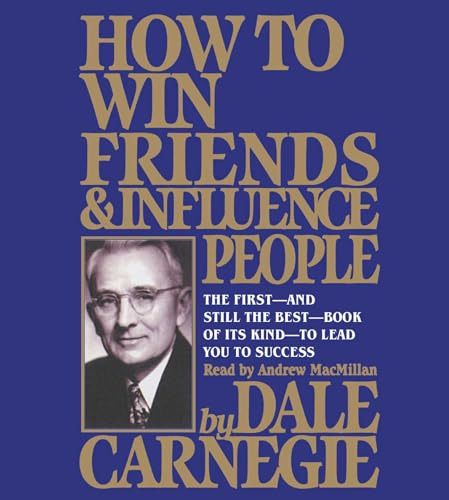
I feel this comes with life experience, but at the start of an interview, practice trying to break the ice. It makes everyone feel at ease. I always comment on something in the background on a video call. Read the book ‘How to win friends and influence people’. It’s an old but powerful book. I read it years ago but still think about it. Small things, like when you meet someone who is confident, or charismatic, and they remember your name, and then repeat it a few times in a conversation. Those small gestures are gold, and traits of charismatic and confident people.Emotional maturity
If you regularly snap at people and this bleeds into your professional life, or if you suffer from anxiety. I write suffer, as some anxiety is healthy. I had chronic low level anxiety for around 6 months in 2018. Which was the result of working in a corporate sales job I detested. I started meditation, and have done it every day (ish) for 7 years since. I had not had that anxiety since. Maybe this came with getting older. Meditation isn’t for everyone, but it’s free, so why not try it? Do a 50 day course, or get an app (if you try it on your own you’ll end up thinking about dinner, code or your late pet hamster that died when you found it under the oven were 4 years old, for the whole session).Treat it like a science
Like you would learn programming, learn how to master all this. It’s all teachable. You might feel uncomfortable, but it will benefit your career and personal life, and you will earn a lot more money in your career if you do this.
Before I was a Software Engineer, I worked as a recruiter. I placed hundreds of people in jobs, and used to speak to about 50 people a day on the phone. There were times I would pick up the phone, and a candidate would just make the conversation easy. They weren’t necessarily funny or charming. They were just on point with their soft skills. And it doesn’t look the same for everyone.
Those people, they never were unemployed for long. They would end up with numerous offers, creating a bidding war and landing the best paid roles in their profession. You don’t have to turn yourself into some weird ass guy who slaps peoples backs, is too loud and laughs at every joke. It’s just a practice of improving yourself so you can communicate your thoughts and ideas to the world better.
Anyway. If any of this resonated, let me know below.
Latest YouTube video is below (featuring advice on how to get into tech in 2025), and I shall see you in the next one.
A 👾
This was so informative ! I had a 2nd interview recently on teams where the second person to interview me was a few minutes late and i had to make small talk with the interviewer , so the small talk really comes in handy !